A homeowner's Solar Rooftop guide
Where to Start With Home Solar: A 7-Step Checklist
Planning home solar? Check your bills, daytime load, On-Grid vs Hybrid, system size, roof and installer with this practical 7-step guide.
Reviewed by QuescoSolar's Solar Rooftop design and installation team
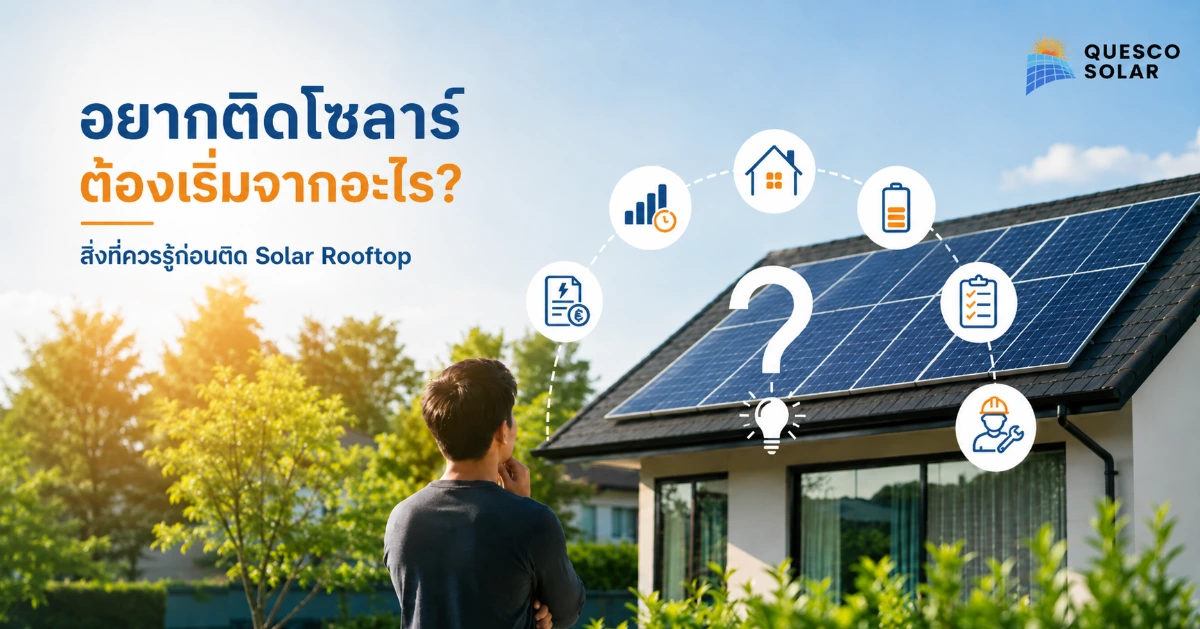
Where should you start with home solar? Begin with real electricity-use data, not “How many panels do I need?” A suitable system depends on more than roof area or the bill total. You need to understand how much power the home uses, when it is used, whether the goal is bill savings or backup power, and what the actual site allows. This guide puts those checks in the right order before you request a quote.
Short answer: where should you start with solar?
Start with several months of electricity bills and identify your daytime load. Then set the goal, choose the system type, estimate the right kW size, survey the roof and electrical system, and compare installers. Real usage data reduces the risk of buying an oversized or unsuitable system.
In this article
1. Review past bills and identify when electricity is used
Review several months of bills together with the daytime load, because identical bills can still require different system sizes.
Grid-connected Solar Rooftop produces most of its power in daylight, so value is highest when the home can use that power immediately—for air conditioning, refrigerators, pumps, a home office or daytime EV charging.
Do not rely on the latest bill alone. Collect several months to see peak and seasonal usage, then note when major appliances run. That is more useful than telling an installer only that the monthly bill is a certain amount.
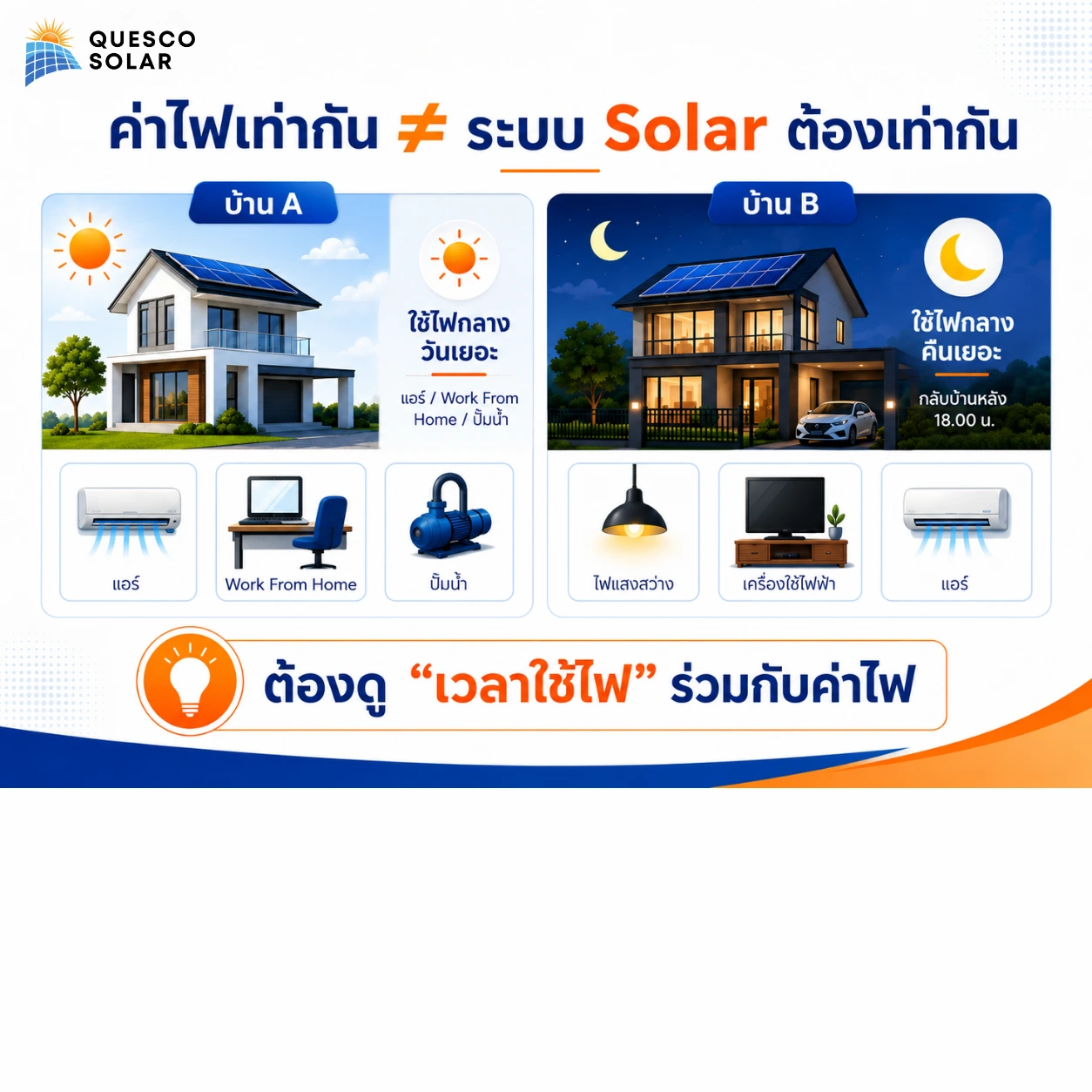
- Several months of electricity bills
- Operating hours for air conditioners, pumps and major loads
- Plans for an EV, more air conditioning or new appliances
2. Set the goal before choosing On-Grid or Hybrid
For daytime bill savings, start with On-Grid. For stored energy or backup power, assess Hybrid with a battery and a properly designed backup circuit.
On-Grid suits homes with daytime consumption whose main goal is bill reduction. Hybrid adds energy storage, but also adds equipment, cost and design constraints.
A standard On-Grid system shuts down when the grid fails for safety. If backup is required, identify essential circuits—such as refrigeration, internet, lighting or pumps—so the backup system is engineered for them rather than merely adding a battery.
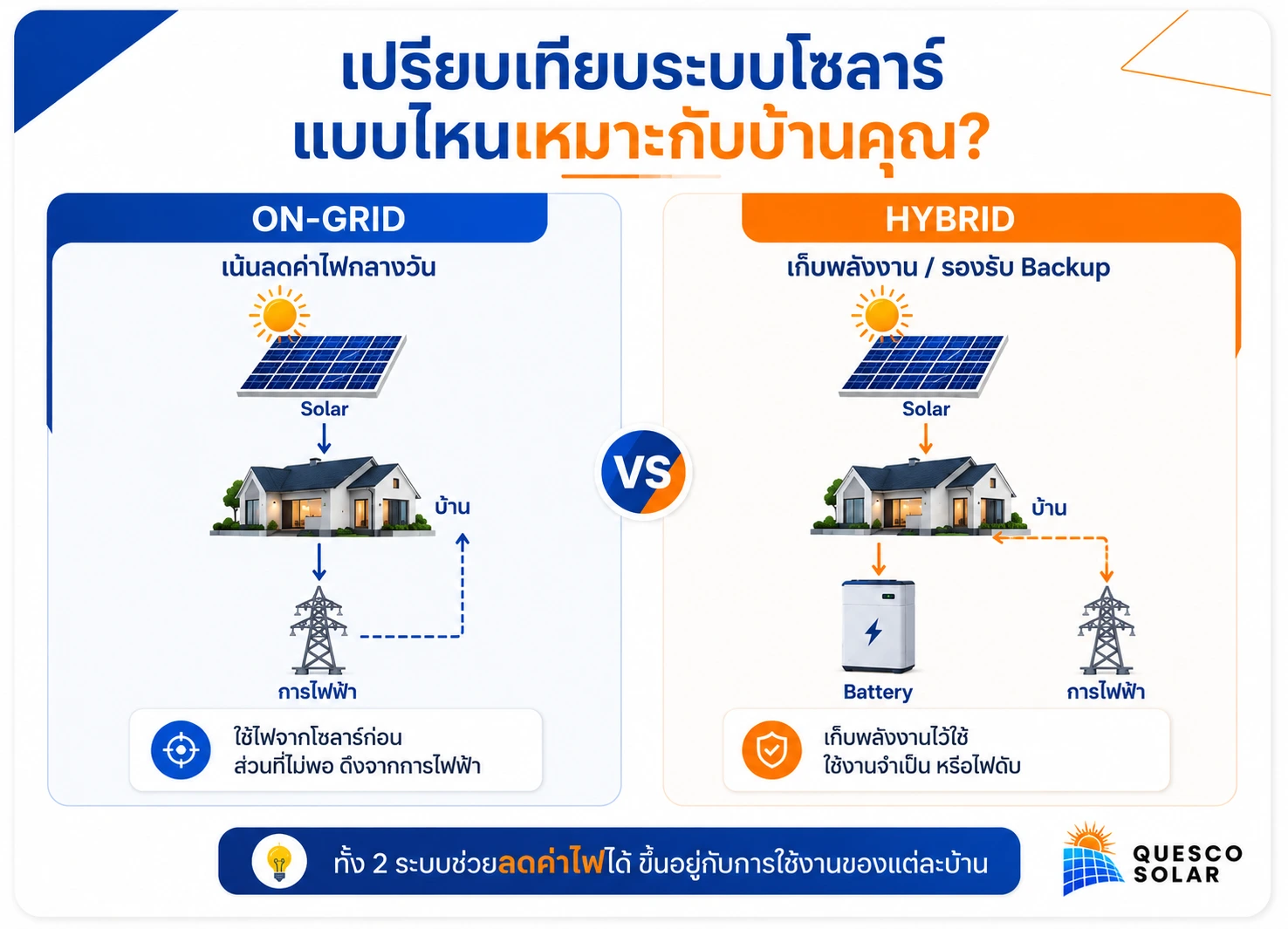
- Daytime bill savings: assess On-Grid first
- Store energy for later: assess Hybrid + Battery
- Backup during outages: define critical loads and design backup circuits
3. Size the system from the home's real load
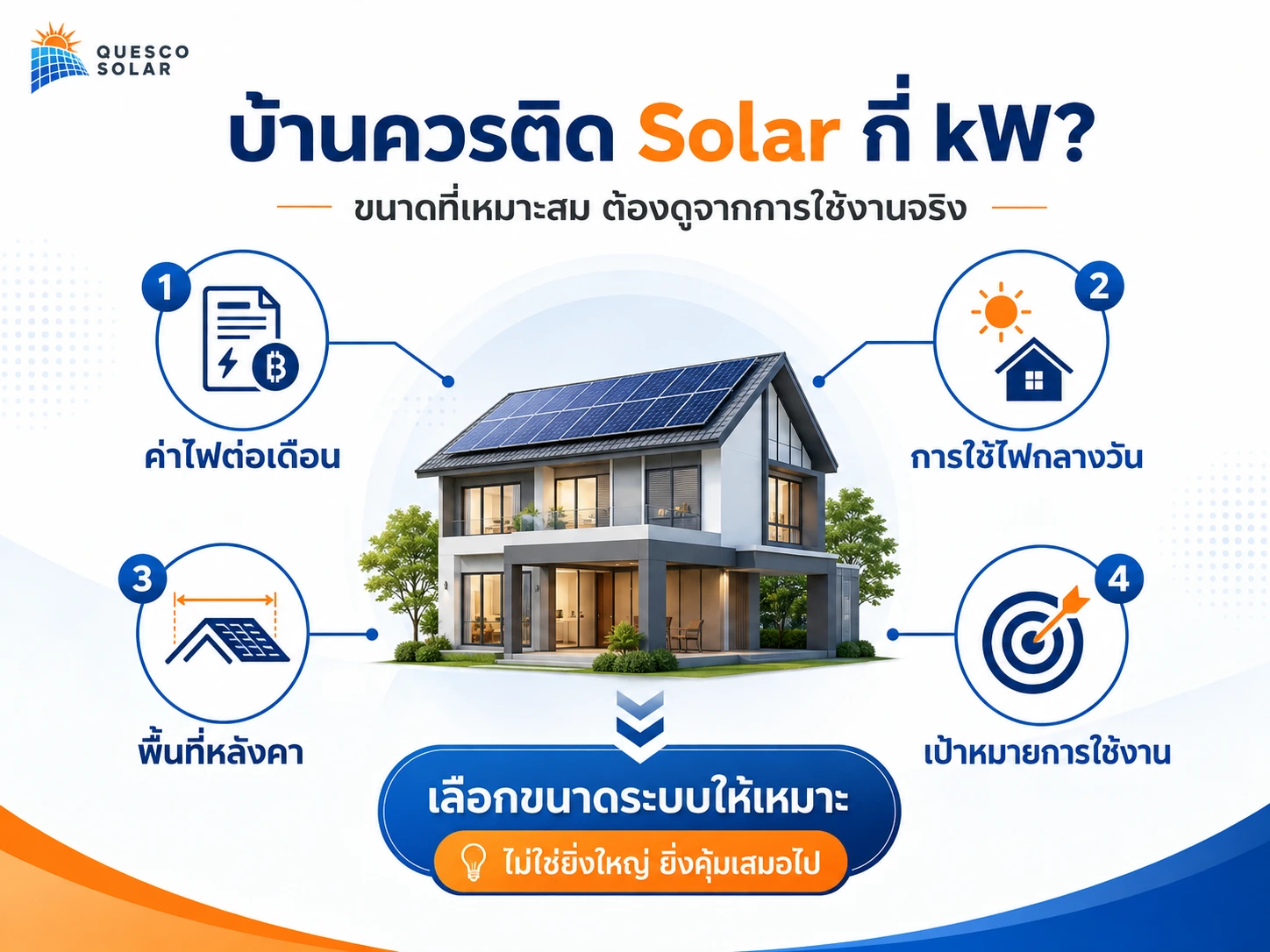
The right size combines daytime demand, electrical service, usable roof area and future loads; it should not be calculated from the bill alone.
A roof that can physically hold 10 kWp does not mean the home should use the entire area. If generation exceeds simultaneous demand, the share of solar electricity consumed on site falls and surplus energy may result.
PEA gives 3 kW as an example for moderate daytime use and 5 kW for higher-use homes, but these are only starting points. Final design still requires load data, roof orientation and shading, plus local grid-connection requirements.
4. Survey the roof and site before finalising a quote
Photos support an initial estimate, but final design should inspect the roof, shading, structure, equipment locations and cable routes on site.
A good survey does more than count panels. It determines how to place them for suitable output, safe maintenance access and minimal risk to the roof and home electrical system.

- Panel area, orientation, pitch and shade
- Roof type, condition and structural suitability
- Locations for inverter, switchboard and battery if used
- Cable routes, connection points and maintenance access
5. Check single- or three-phase service and connection requirements
Many single-phase homes can install solar, but inverter size, system design and grid connection must match the service and local utility requirements.
Before approving a design, inspect the main board, cable sizes, protective devices, earthing and the condition of the existing installation. Identify whether the property is served by MEA or PEA so the connection process and documents are planned correctly.
Connection rules and surplus-purchase programmes can change. Confirm current information with the responsible utility before applying or including export income in financial projections.
6. Compare installers on standards, not price alone
A good quote identifies the equipment, design and installation standards, responsible engineer, commissioning tests and after-sales owner.
PEA recommends checking panels, inverters, cables, connectors, protective devices and mounting structures, as well as product documents, the electrical design, the signing engineer, commissioning tests and proper grid connection.
Ask each bidder to state scope and exclusions clearly so quotations can be compared on the same basis, and assess after-sales support alongside warranty duration.
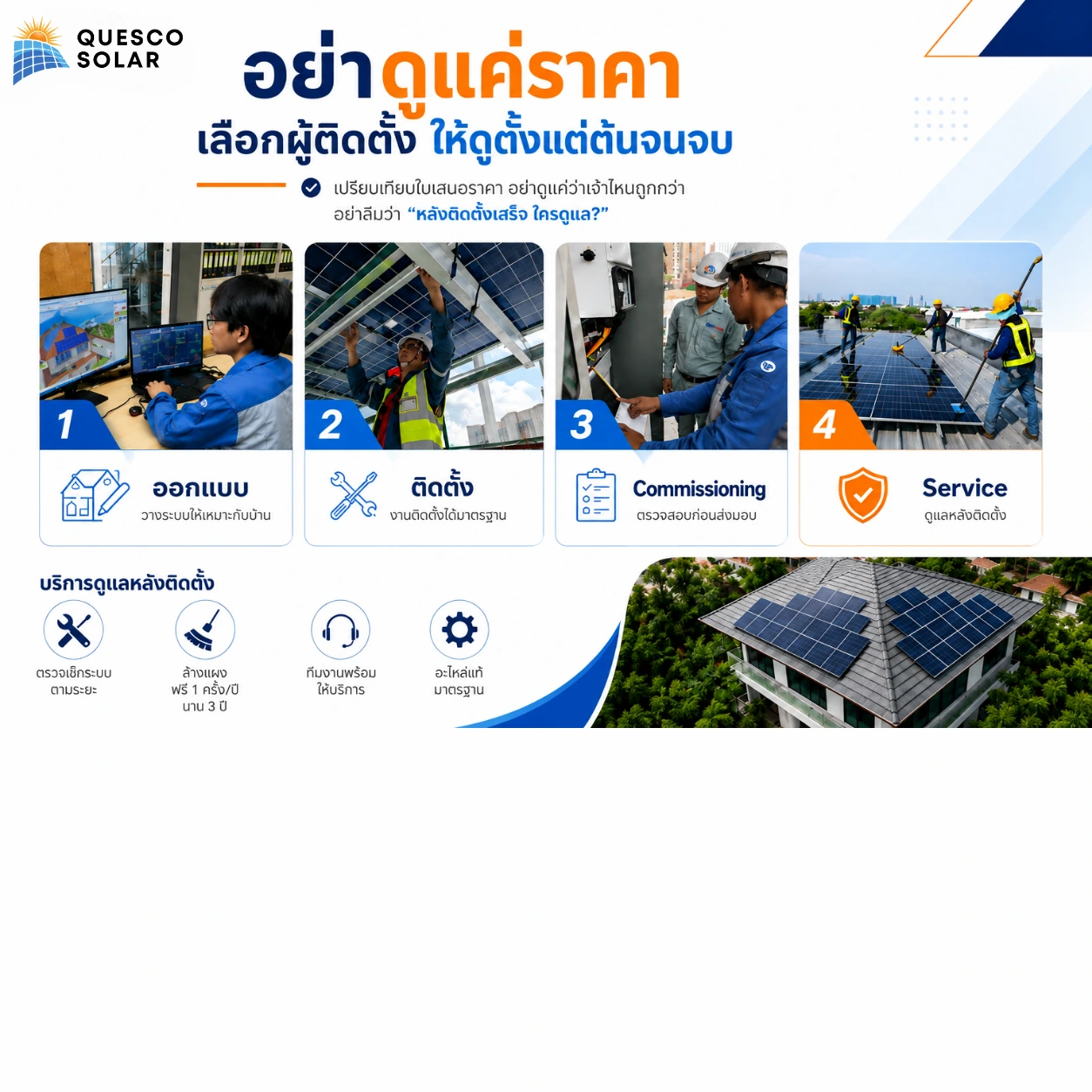
- Equipment models match the quotation
- System design and responsible engineer
- Protective devices and installation standards
- Commissioning tests and monitoring
- Warranty terms and after-sales contact
7. Prepare complete information before requesting an estimate
Send past bills, usage times, major loads, electrical service, roof photos and the goal so the installer can estimate a realistic size and budget.
An online estimate is preliminary. Generation, savings, payback and final price should be refined after the site survey, system design and confirmation of actual consumption.
- Past electricity bills
- Peak usage periods
- Major appliances and planned loads
- Single- or three-phase service
- Photos of the roof, main board and installation area
- Goal: savings, storage or backup
Key takeaways
- Size the system from daytime load and goals, not the bill or roof area alone
- A home focused on daytime savings may not need a battery
- Survey the roof, electrical system and grid requirements before final design
- Compare standards, equipment, documents, testing and after-sales service alongside price
FAQ
Frequently asked questions before installing home solar
Where should you start with home solar?
Start by collecting past electricity bills and identifying the home's daytime load. Then define whether the goal is bill reduction, energy storage or backup power before choosing the system type, estimating size, surveying the site and comparing installers.
See how to review electricity useHow high should the electricity bill be before installing solar?
There is no universal threshold. Homes with more daytime consumption can usually use a greater share of solar generation even when total bills are similar. Review past bills and the load profile before sizing.
Read about bills and daytime loadWhat solar size fits a home with a 5,000-baht bill?
The bill alone is not enough. Daytime use, appliances, electrical service, usable roof area and future loads must be assessed before recommending a kW size.
See how to size the systemCan a single-phase home install Solar Rooftop?
In many cases, yes. System and inverter size must suit the electrical service and comply with the relevant MEA or PEA connection requirements.
See electrical and connection checksIs solar worthwhile if nobody is home during the day?
Yes, but identify loads that still run—such as refrigeration, air conditioning, pumps or EV charging—and size around them. If most consumption is at night, compare Hybrid and battery options.
See how to assess daytime loadsWill solar keep the house powered during a blackout?
A standard On-Grid system shuts down when the grid fails. Backup requires a compatible system, battery and a dedicated backup circuit designed for essential loads.
See how to choose a backup systemDoes home solar require a battery?
Not for every home. If the goal is to use solar directly during the day, a battery-free system may be more suitable. Consider a battery when storage or backup is needed and the additional cost is acceptable.
Compare systems with and without batteriesHow many solar panels does a home need?
Panel count depends on panel wattage and the system size suited to the actual load. Do not start from the maximum number the roof can hold; determine the useful kW size first, then calculate panel count from the selected module.
See how to estimate kW before panel countShould a home choose On-Grid or Hybrid solar?
For direct daytime savings, assess On-Grid first. If stored energy or backup power is required, consider Hybrid with a battery and a properly designed backup circuit, comparing the extra cost with the loads that genuinely need backup.
See goals and system typesWhat types of roofs can support solar panels?
Many roof types can support solar, but the material condition, load-bearing structure, usable area, orientation, pitch, shading, fixing points and maintenance access must be checked. Photos help with an initial estimate, but final design should follow an on-site survey.
See the roof survey checklistWhat approvals are required for Solar Rooftop?
Requirements depend on the system type, purpose and whether the property is served by MEA or PEA. Grid-connected systems must follow the applicable design and submission rules. Confirm current requirements with the responsible utility before installation or any surplus-power application.
See electrical and document requirementsWhat should be prepared before requesting a solar quote?
Prepare past bills, peak usage times, major appliances and planned loads, single- or three-phase service details, roof and main-board photos, and whether the goal is bill savings, energy storage or backup.
See the pre-quote information checklistSources used for verification
Utility requirements and programmes can change. Confirm the latest details with the responsible utility before proceeding.
Let QuescoSolar size a system from your real electricity use
Prepare your electricity bills, roof photos and usage times for a preliminary assessment before the site survey.